Developing a new artwork for long-term, outdoor display is challenging at the best of times, but we just happened to begin designing Play It By Ear a month before COVID swept the globe in 2020. While the pandemic delayed the project significantly, it also allowed more time for research & development.
This blog post is about our approach to designing Play It By Ear.
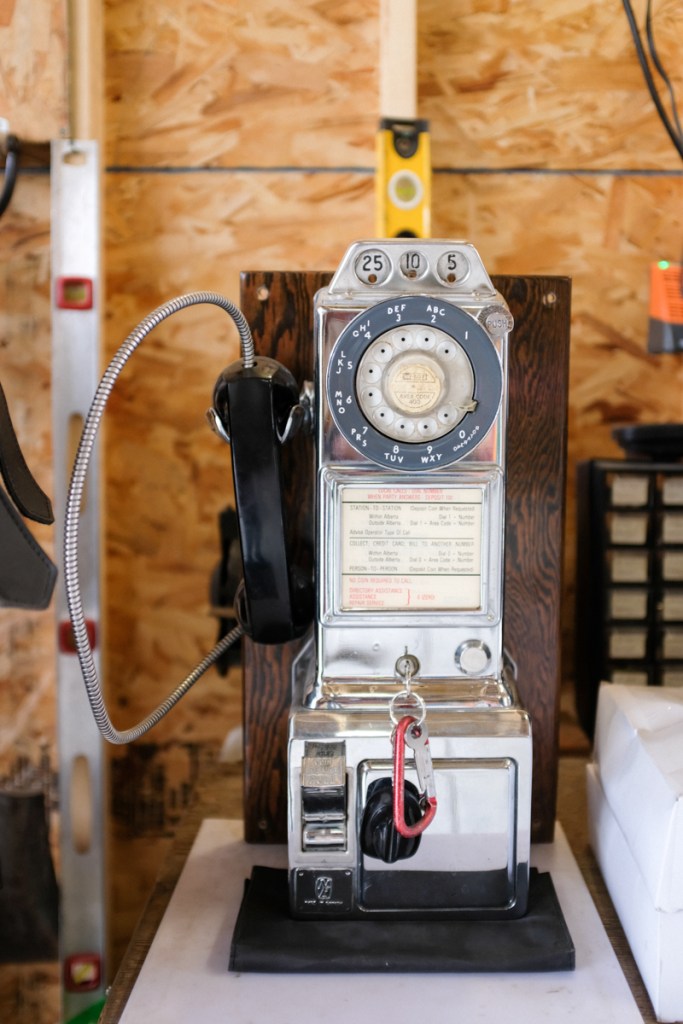
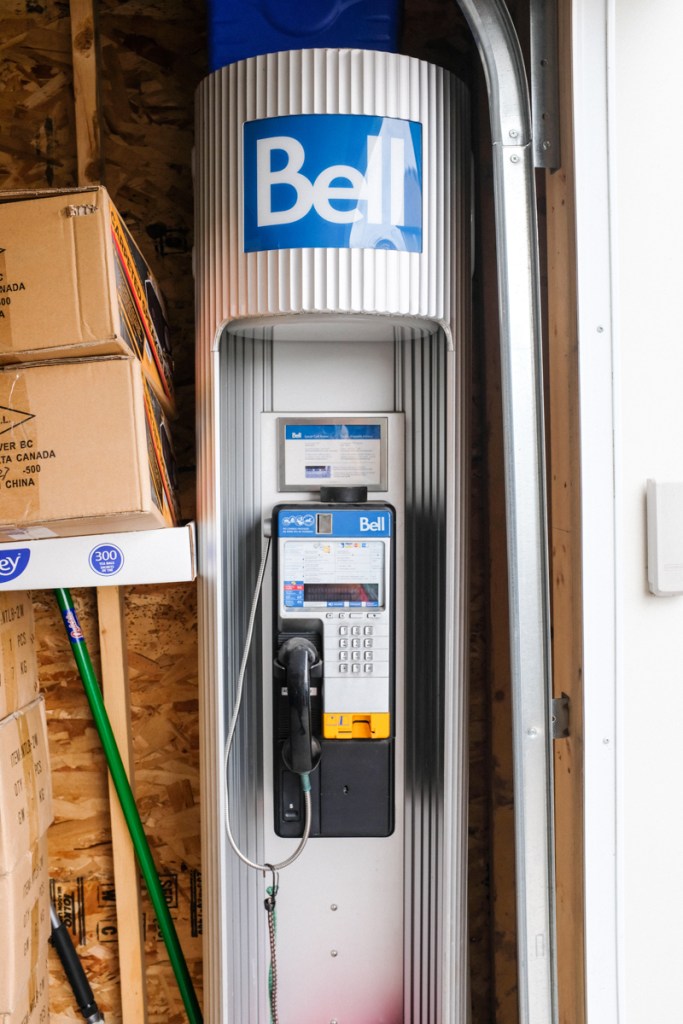
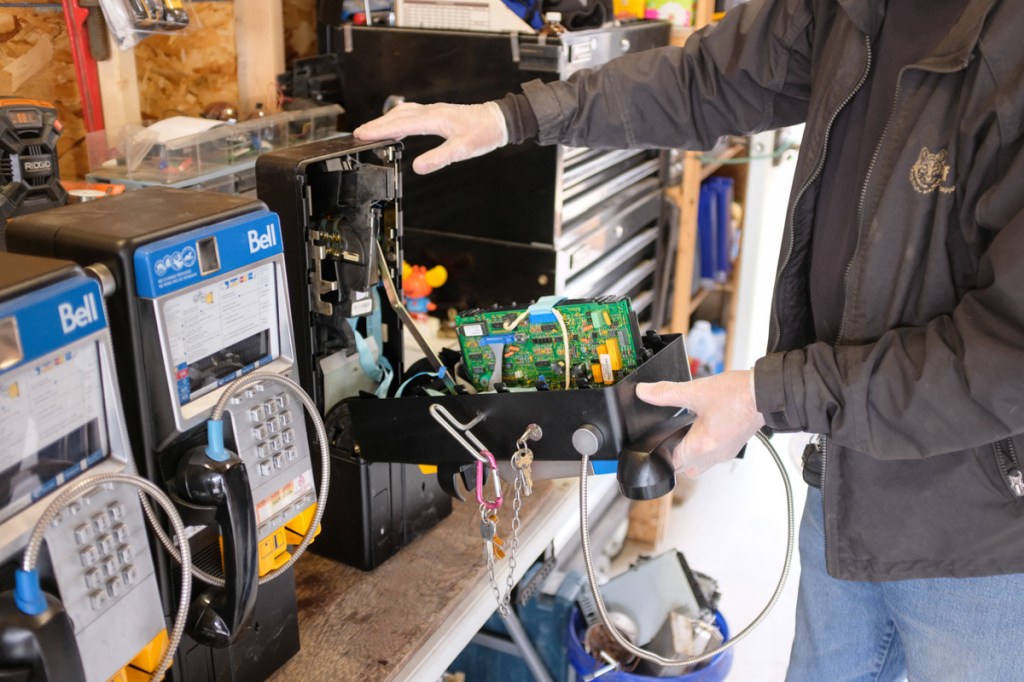
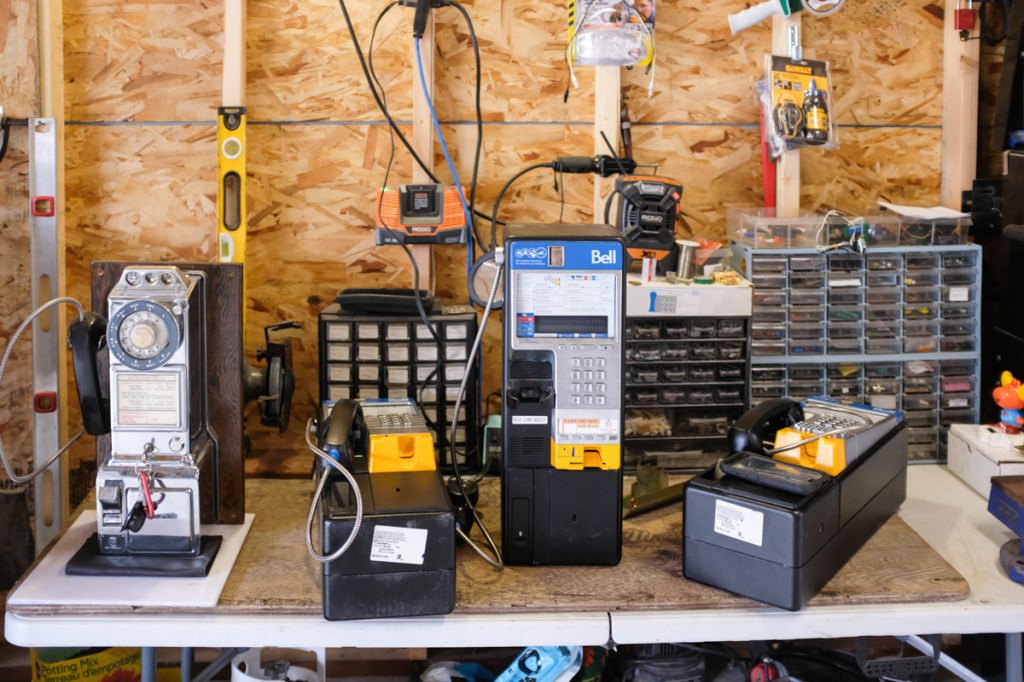
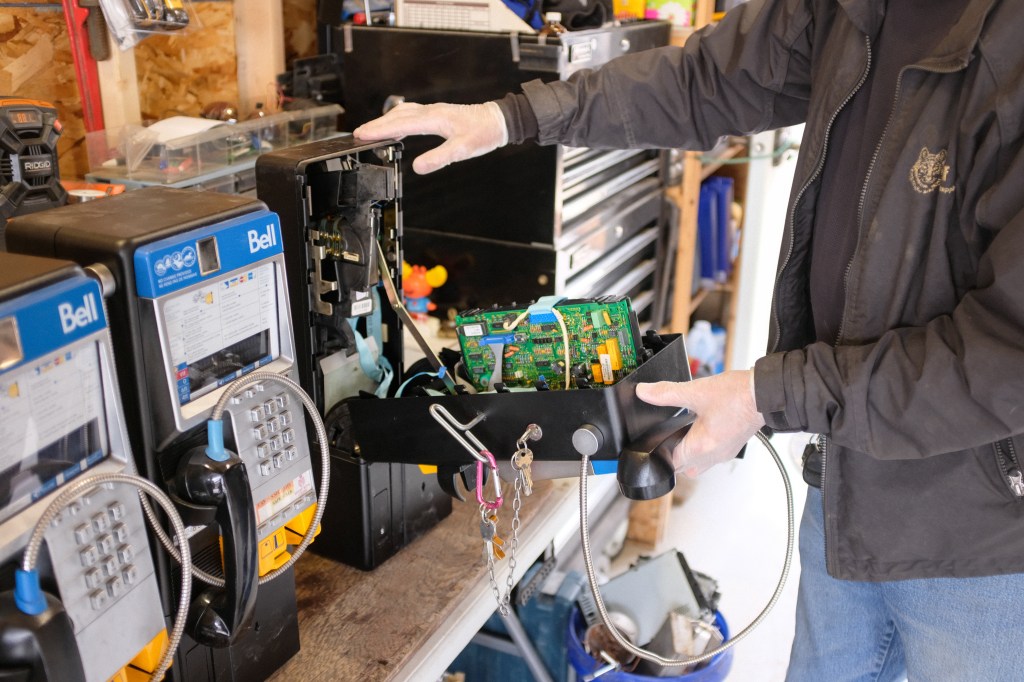
We started where we usually begin when working with an existing technology: by talking to an expert. Since 2000, John Liikala has been the Bell Mobile maintenance person for the remaining 40 payphones in Alberta (out of a previous 800), as well as “institutional phones” in most major prisons across the province. We approached him as a consultant on this project, and he enthusiastically showed us his collection of payphones in a garage in the suburbs of Calgary.
From John, we learned the basic technology behind payphones, and many facts we didn’t know before. For example, payphones are able to run self-diagnostics that notify a central office if the phone stops working. This is how they know to send a repair person. The handsets are made of bakelite, and easily replaceable. Payphones have armoured cabling with an internal aircraft cable to avoid breakage. The length of cables varies in different contexts – they are very short in prisons, and longer in public settings.
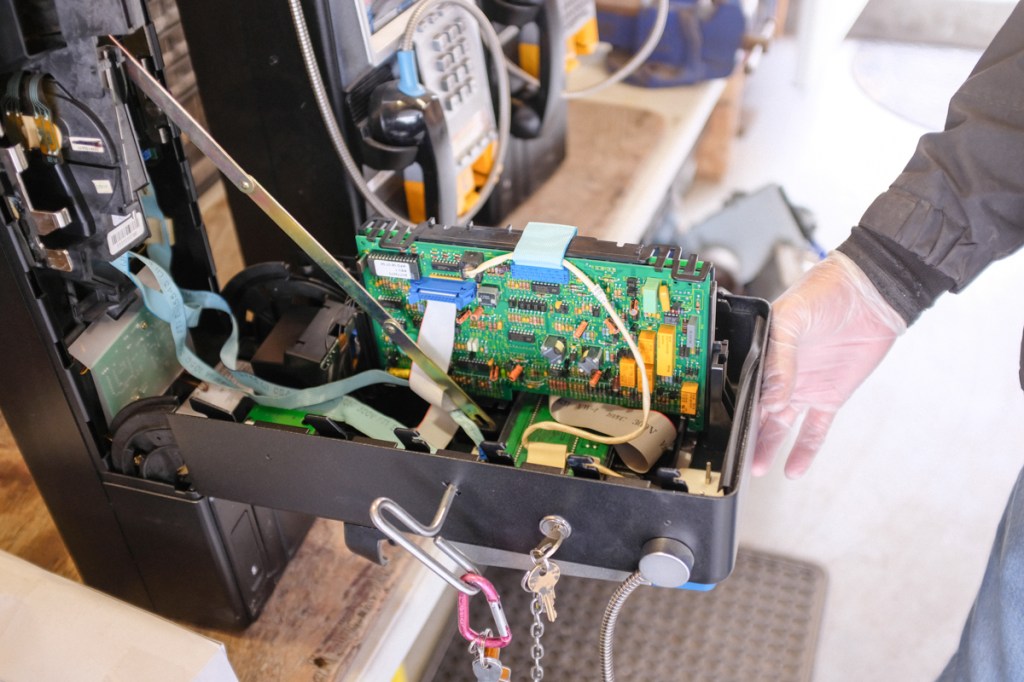
John shared the most common ways that payphones get broken, and which elements of the phone were designed to be “sacrificial” – that is, break first to protect more important (and expensive) elements of the phones from breaking. He also shared an epic story about a payphone heist!
It was intriguing to look into the guts of these ubiquitous objects, and learn more about what goes into building and maintaining payphones as they slide into rareity. It’s not an understatement to say it was a fascinating meeting.
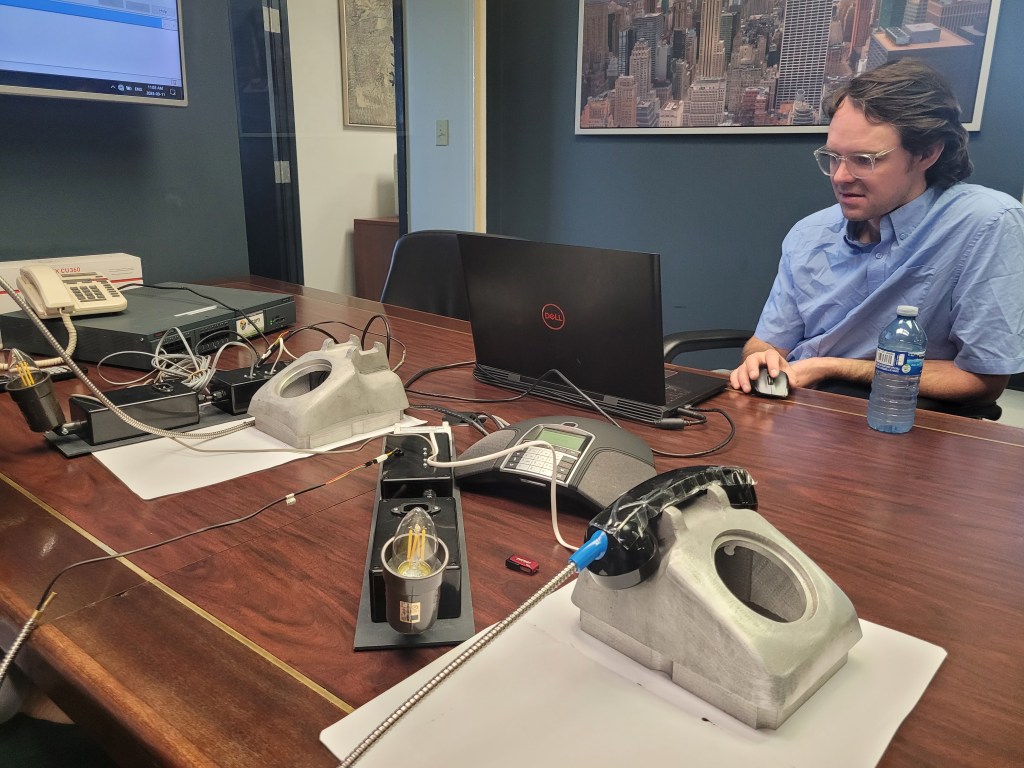
We also met with various telephony experts to discuss telecommunications. The internal system that connects each phone in Butler Memorial Park to the next is based on AVAYA software, and allows for the collection of voicemails. This system is commonly used for complex answering systems in office contexts.
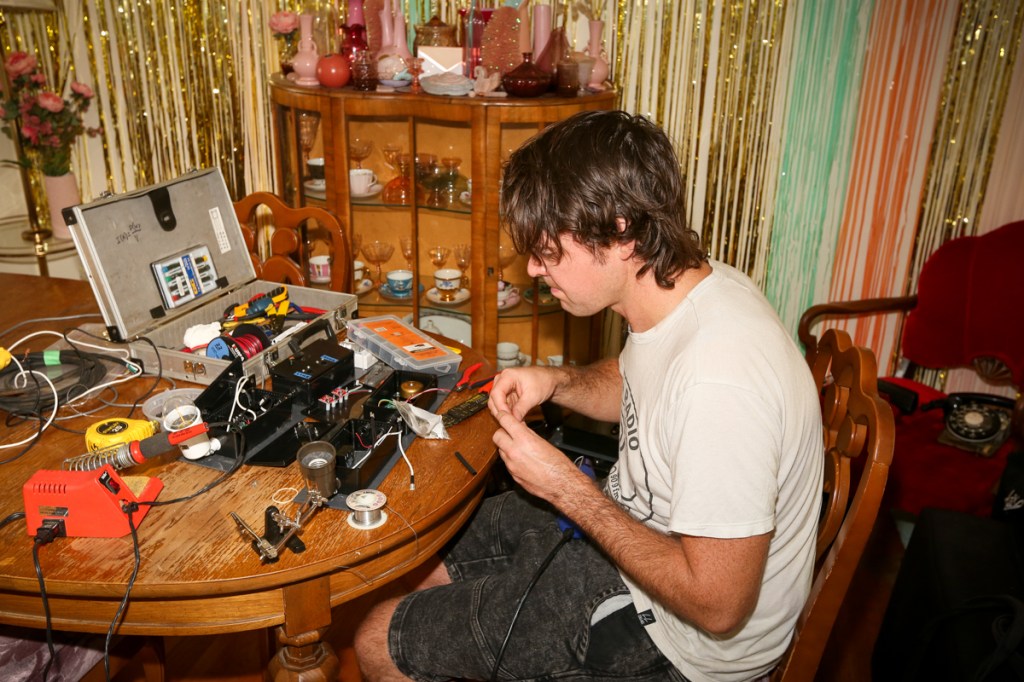
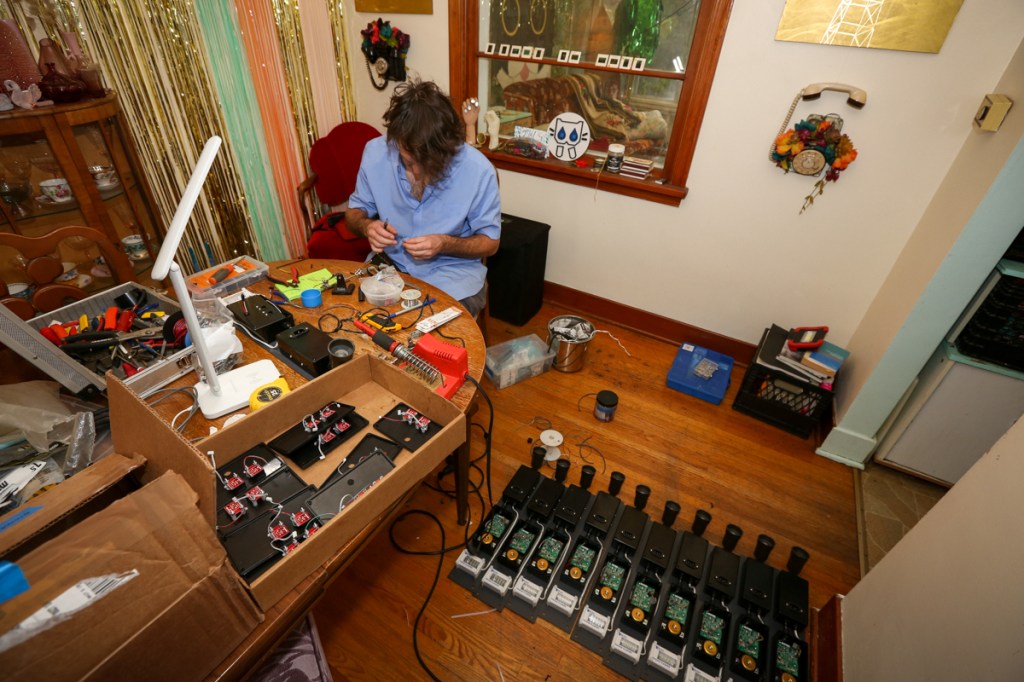
Building the internal components
At first, we were worried that telephone technology might become outmoded in the next few years, given how old it is already. If telephones retire from common use, it would create a problem finding future maintenance materials for the artwork. However, from our conversation with John and other experts, we soon realized that we needn’t worry: telephone systems are used commonly for essential infrastructure like fire systems, apartment buzzers, and prison visitation rooms. These systems aren’t going away any time soon (for better or for worse).
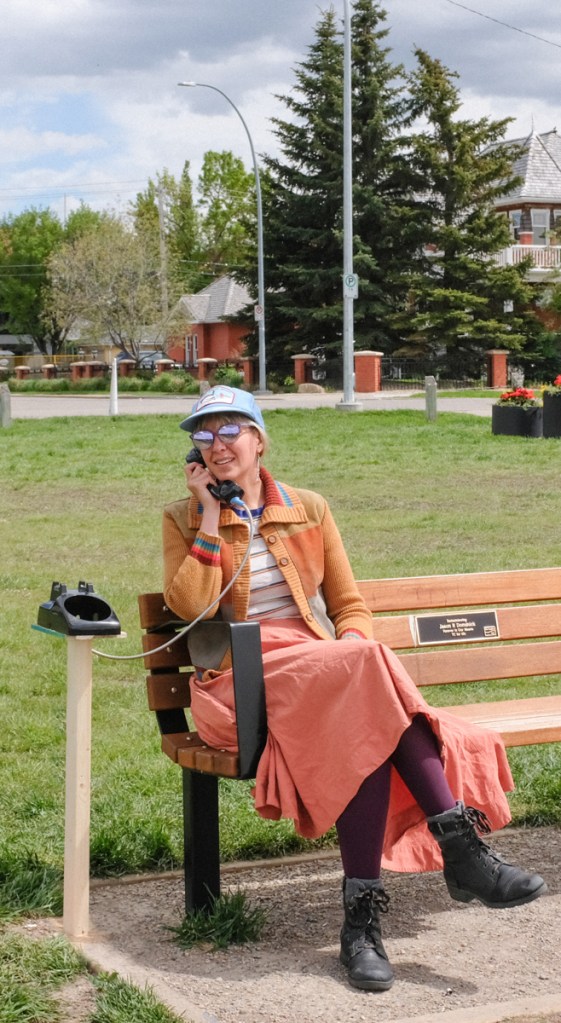
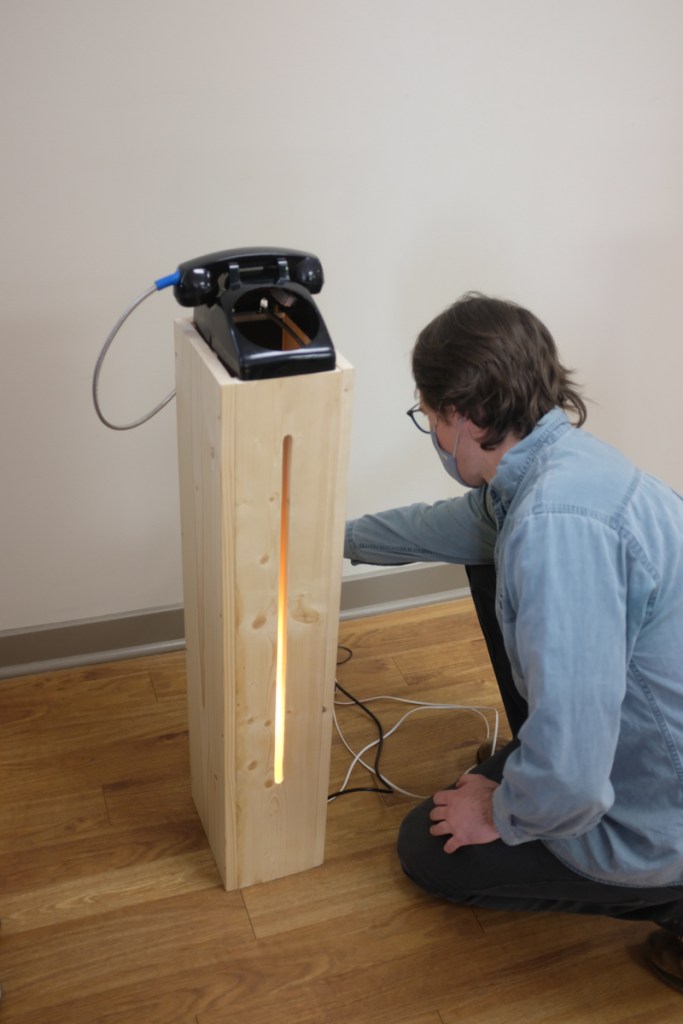
More prototyping
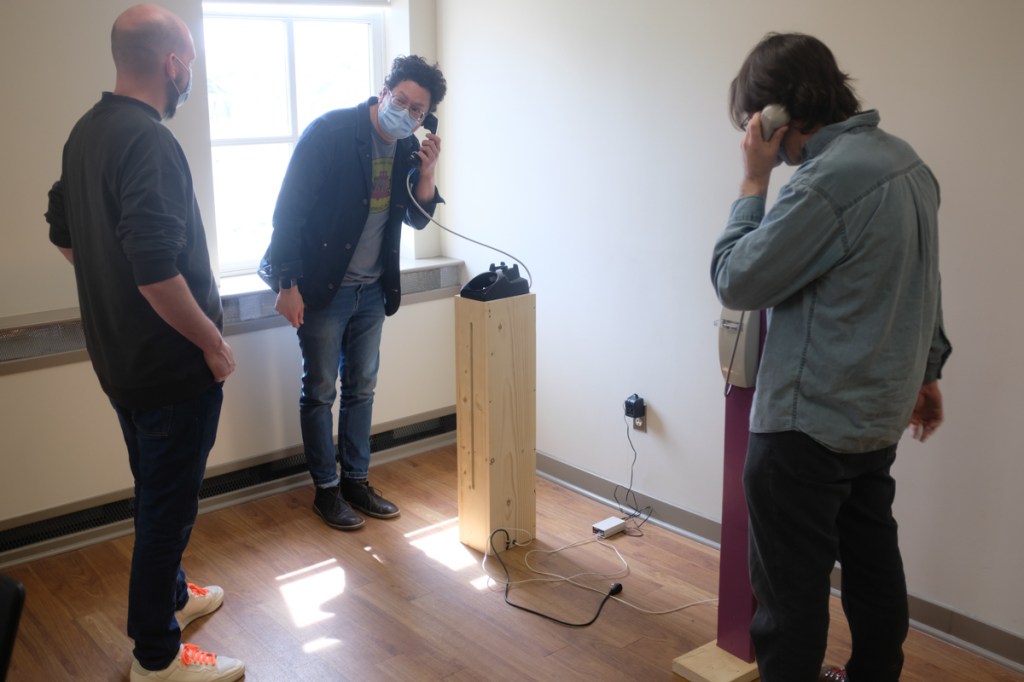
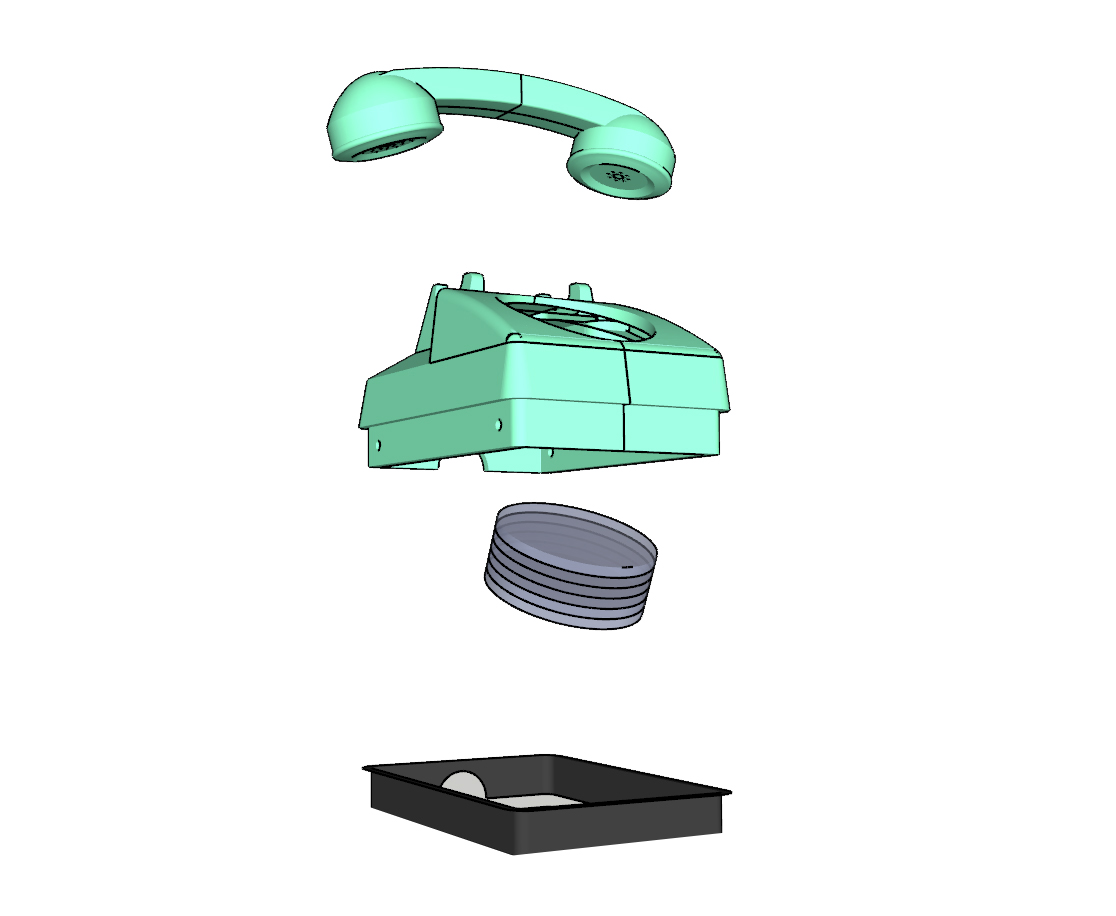
We were researching these systems at the same time as we were prototyping our design, building multiple iterations of the internal components.
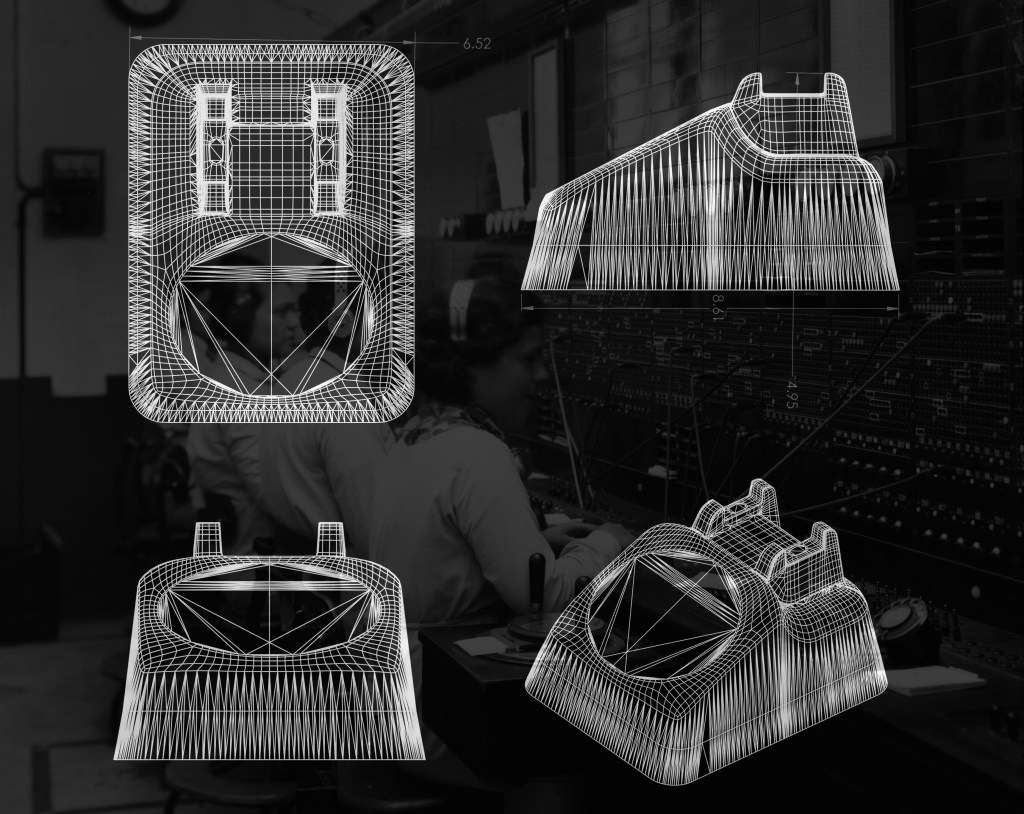
We wanted the final phone pillars to look like extruded analog rotary phones – tall enough to use from a standing position, but short enough for children to reach or for visitors to use while sitting down. The height also needed to be taller than the length of the cable – to avoid people dropping the handsets on the pavement and damaging them.
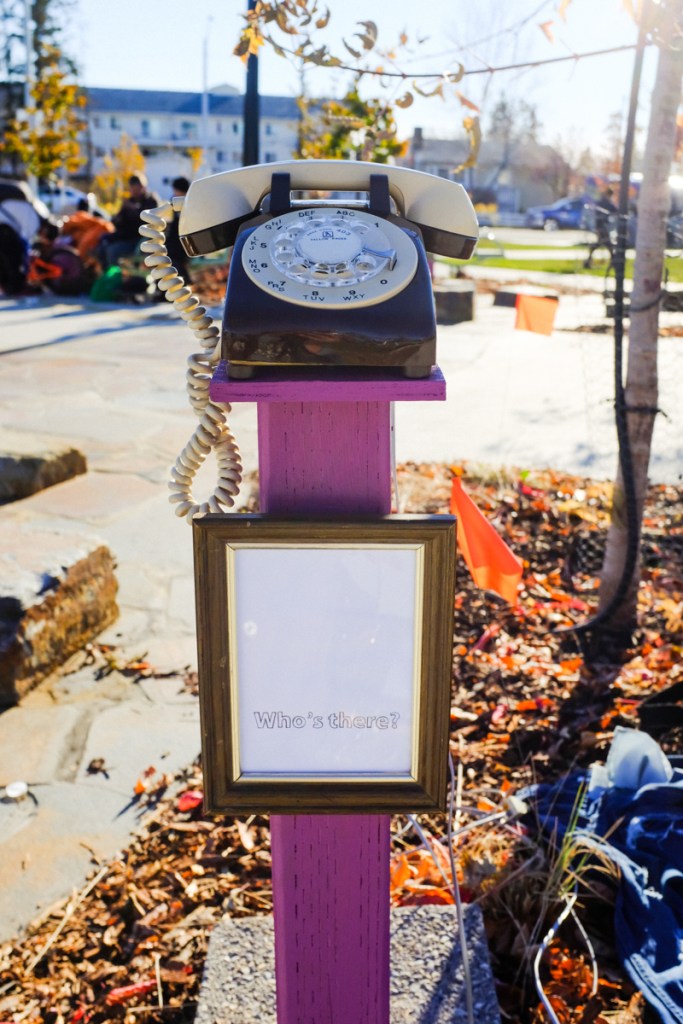
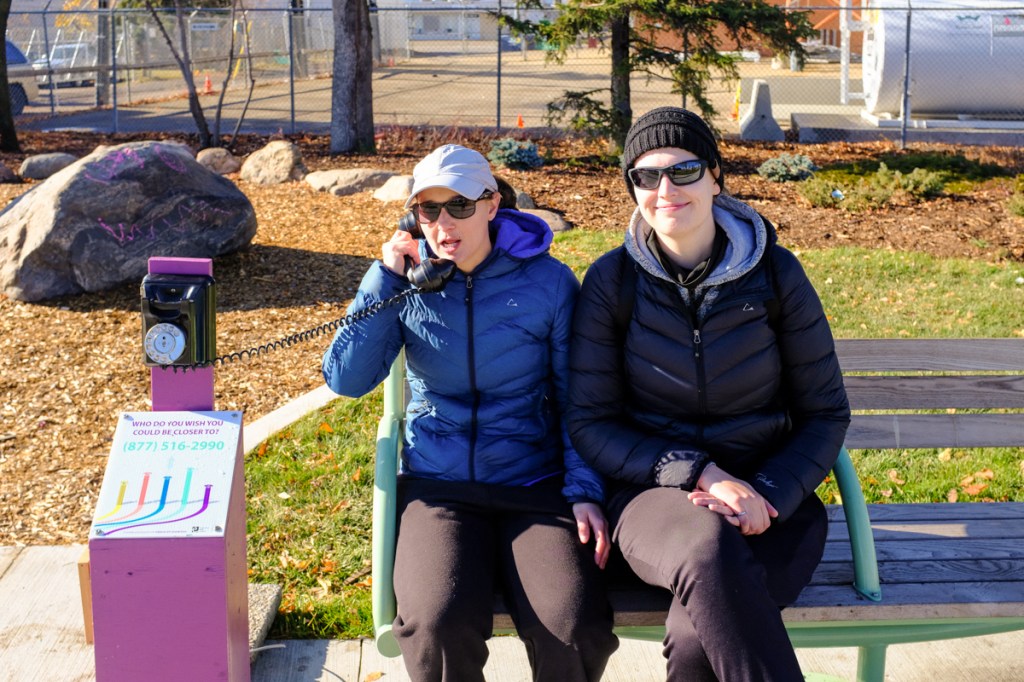
As part of our process, we hosted several temporary phone pop-up events in Butler Memorial Park, just to make sure we understood (loosely) how the phones will be used in the space. We adapted the designs accordingly.
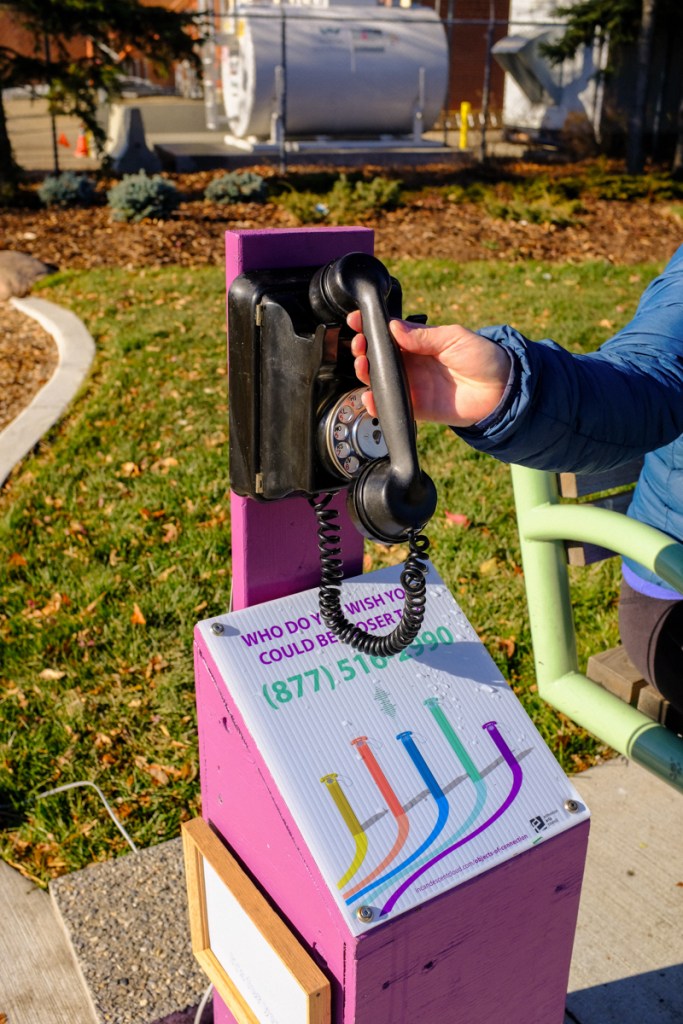
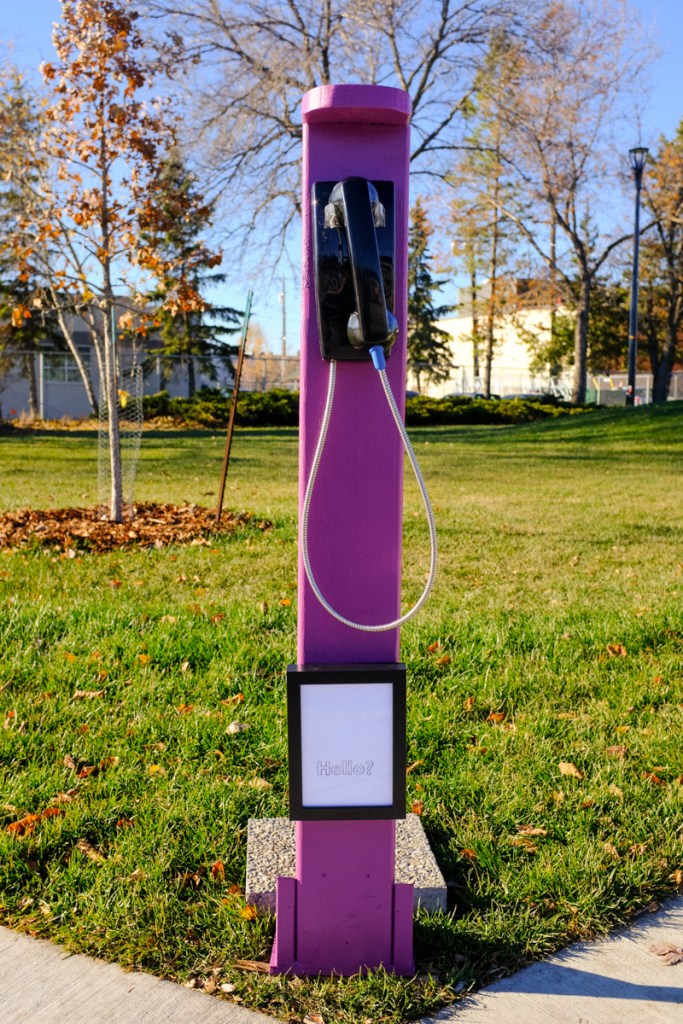
We wanted the artwork to be sensory, with an emphasis on sound. However, from our pop-up tests, it became evident that not everyone will want to use the phones firsthand. They may want to observe others using the phones, or benefit from the colour and whimsy of these mysterious objects in the park. For those uninterested in talking, or physically unable to hear, we wanted to ensure there was a visible element of intrigue to the artwork.
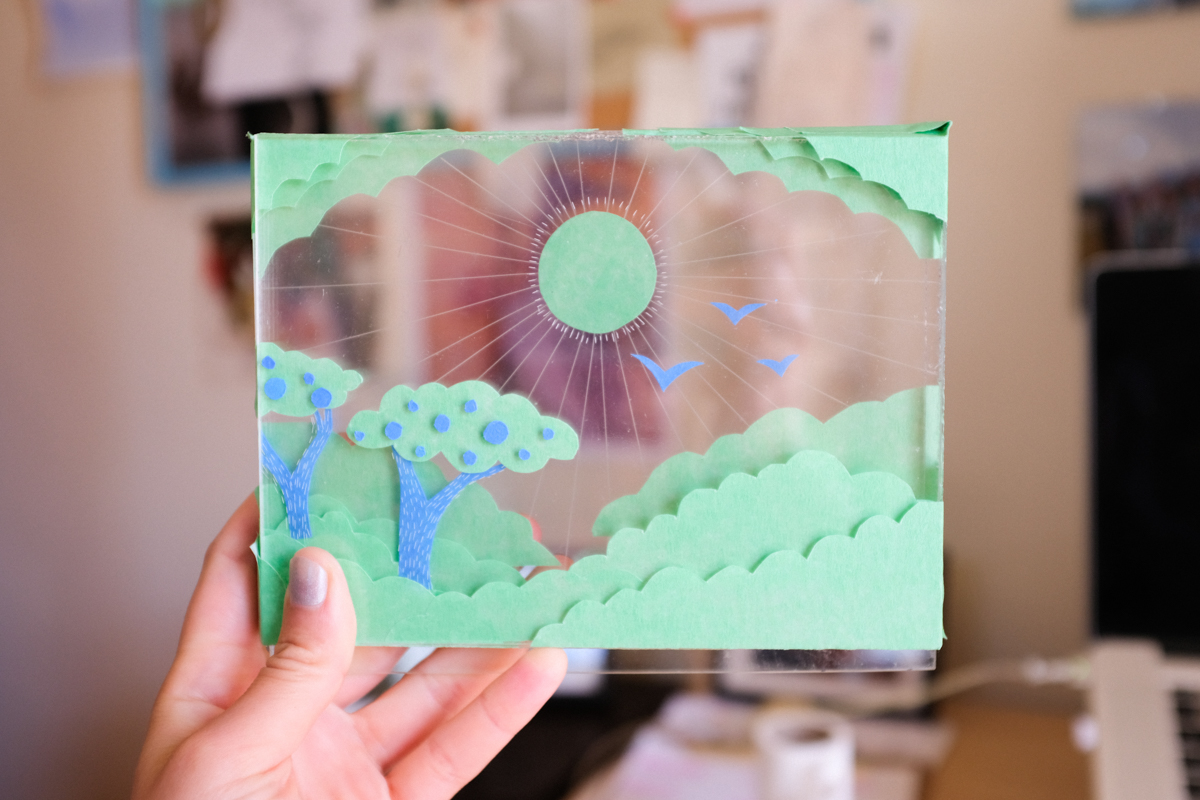
We designed “telephone windows” where the rotary dial would normally be. These little round windows were designed to house flat-pack dioramas (drawings with layers of vinyl) of photographs. These photos were submitted by the public and meant to show “a place that feels like home.” We’ll talk more about this in a future blog post.
Diorama tests
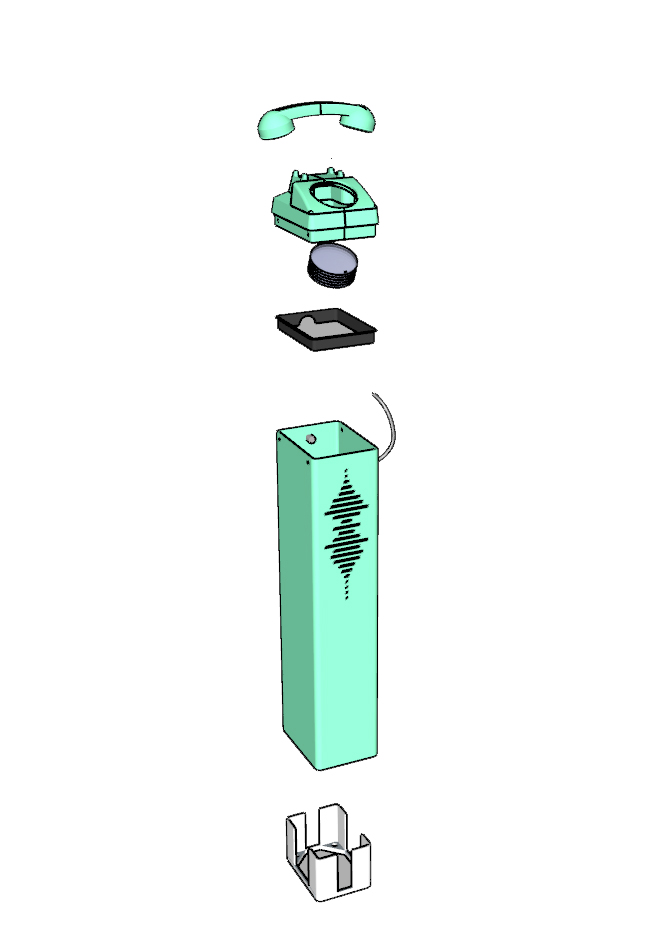
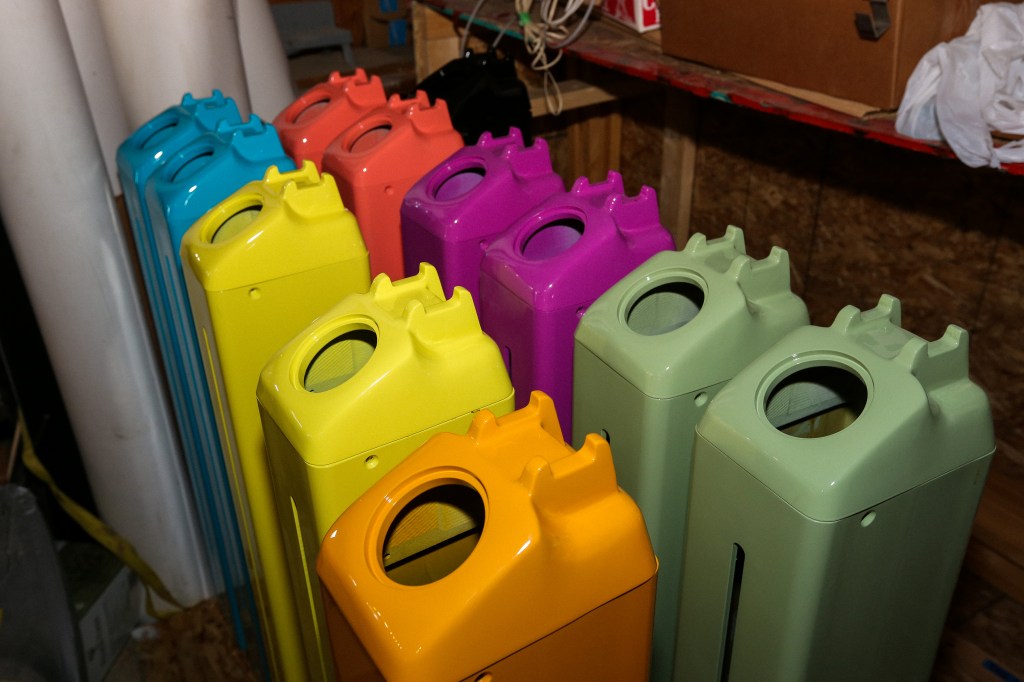
Once we had done enough tests to be satisfied that the project was possible, we began refining our telephone pillar designs. We designed the pillars to ensure all the components would fit into a robust housing. We worked with conservators at the Edmonton Arts Council to determine the best materials and finishes for every element of the work.
We had to consider waterproofing, air-flow and microenvironments, snow clearing, visibility at night, vandalism, metallurgy, functionality, and cultural references. It was important to make sure none of the phones look too much like Help Phones or payphones.
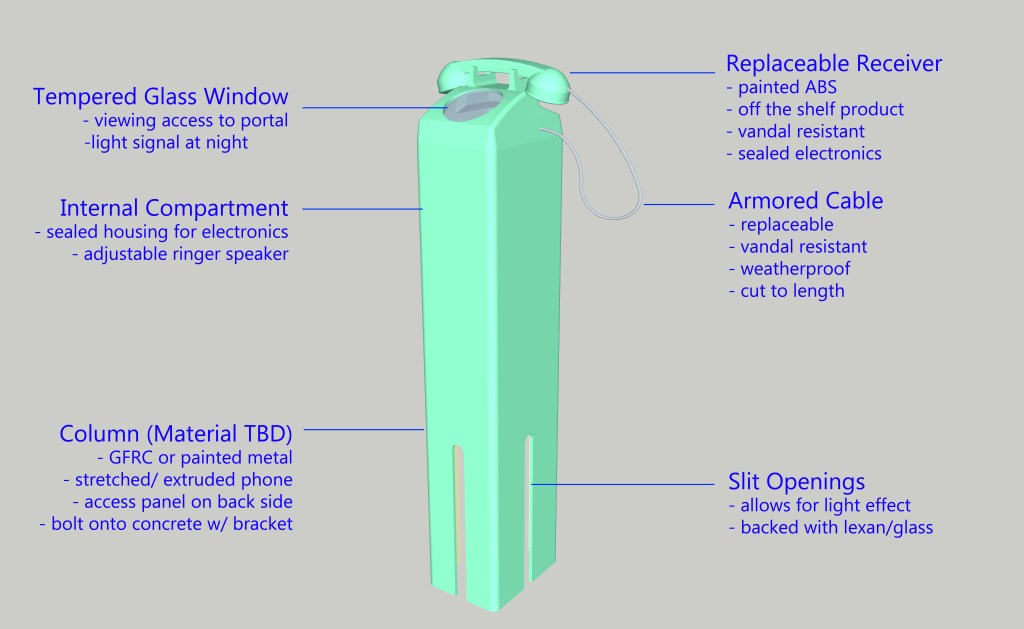
This was only half the design, of course. The other aspect of Play It By Ear involves the swooping “landlines” curling underfoot throughout the park.
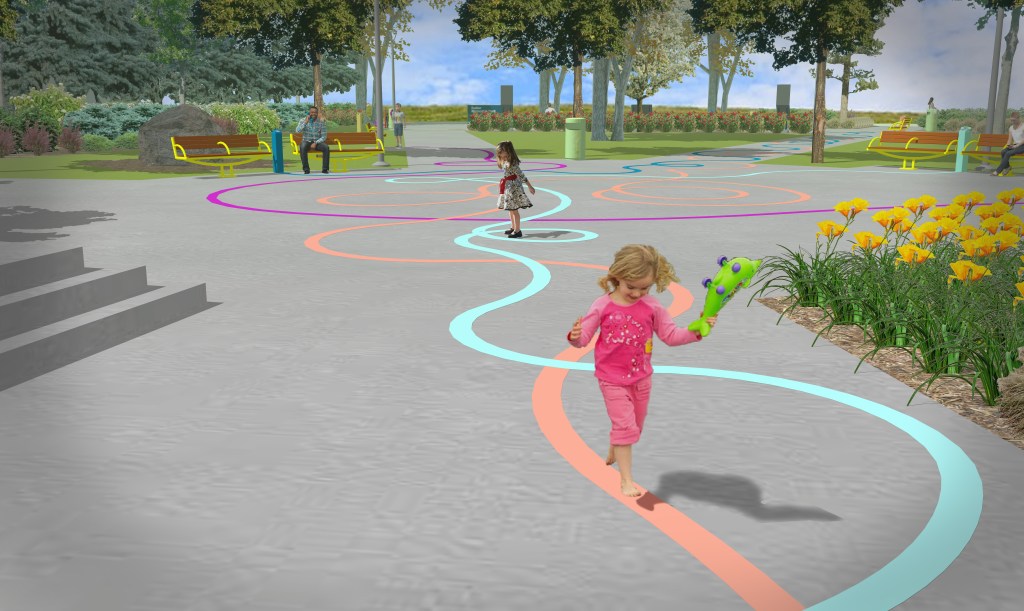
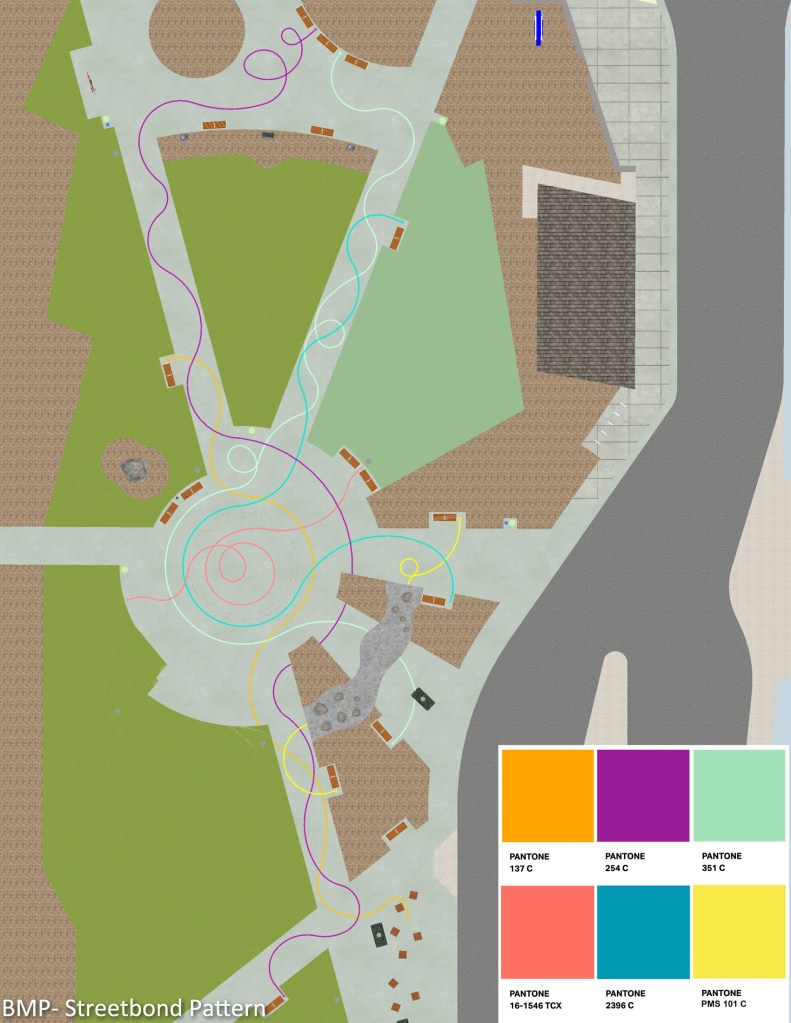
The paint colours were carefully chosen to match aspects of the park (like the green benches and orange zebra crossing) while also matching the milieu of retro Princess Phone colours.
Painting underfoot proved to be a challenge in a park where snow-clearing is essential in the wintertime. Edmonton will often experience huge snowfalls in Winter, and the climate stays cold for many months, allowing snow to build up.
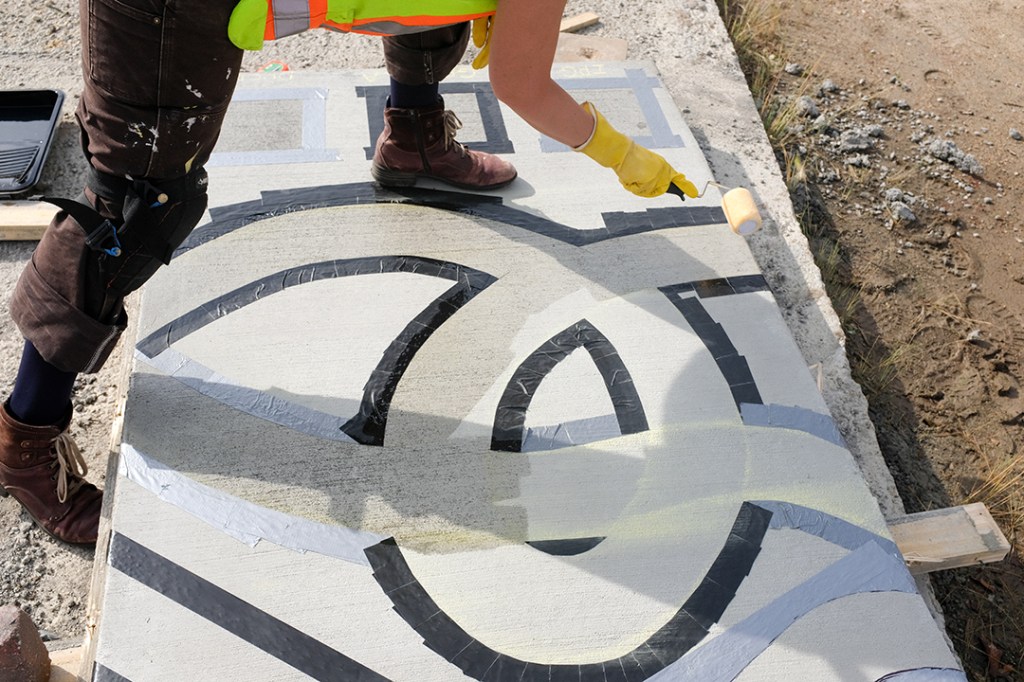
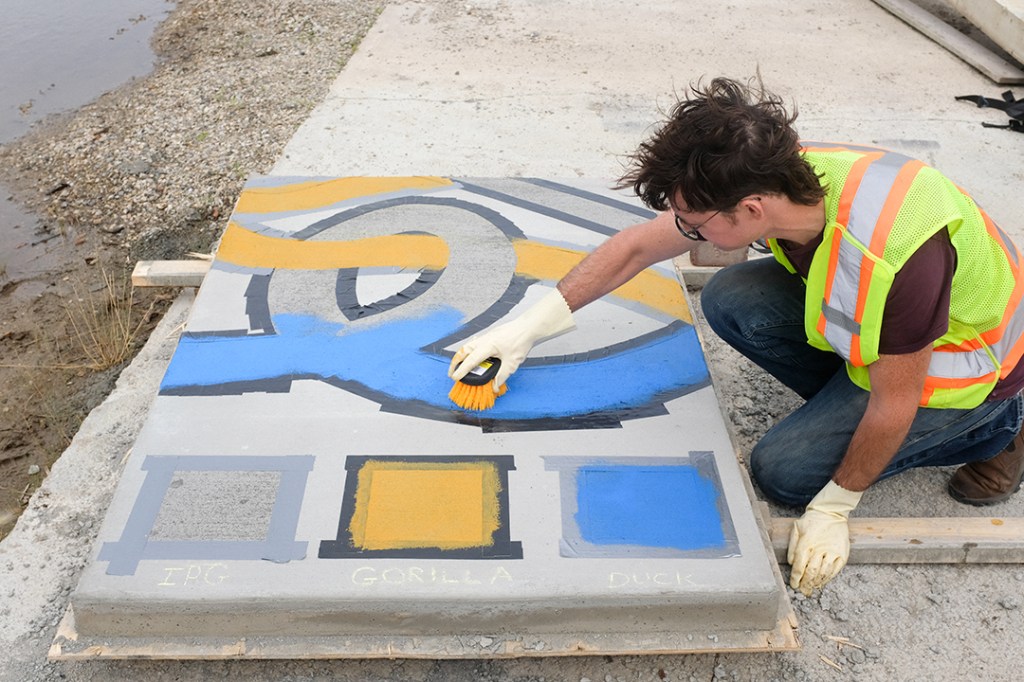
Streetbond test pad, with assistance from SevenM
We needed to use a special product to contend with winter. The paint underfoot needed to be strong and durable, able to withstand freeze & thaw cycles of a Canadian winter city, snow removal, the occasional vehicle, and foot-traffic across all seasons. The paint also needed to be grippy when wet, not slippery.
At first, we experimented with a product called Streetbond, before realizing that the primer is too caustic to apply to a masked shape on a bare concrete surface. The primer would eat through the adhesive of our tape, and bleed like crazy into the surrounding brush-finish concrete. When we brushed on the paint, it was okay, but brushing the entire park was an unreasonable amount of labour. Painting or priming the whole park would have worked, but it wasn’t in the budget. This became a sticking point.
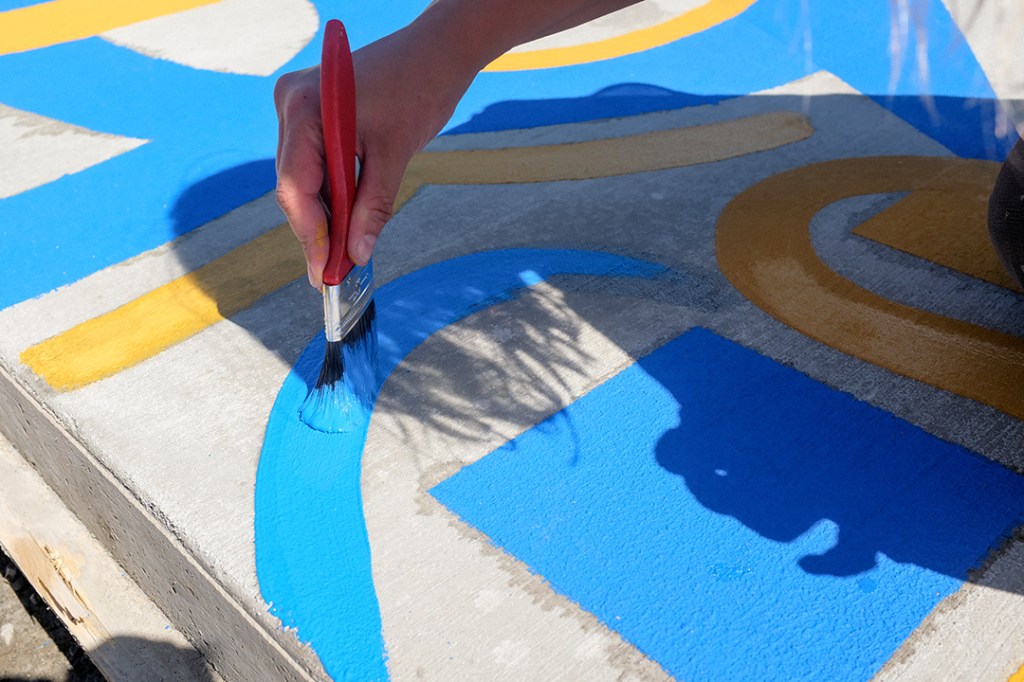
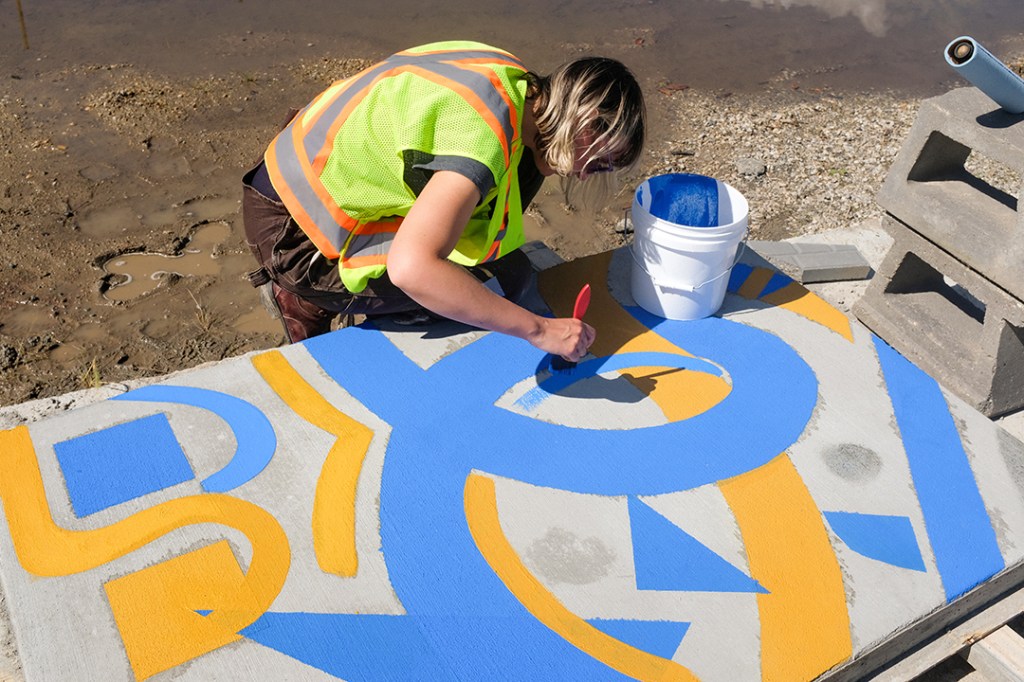
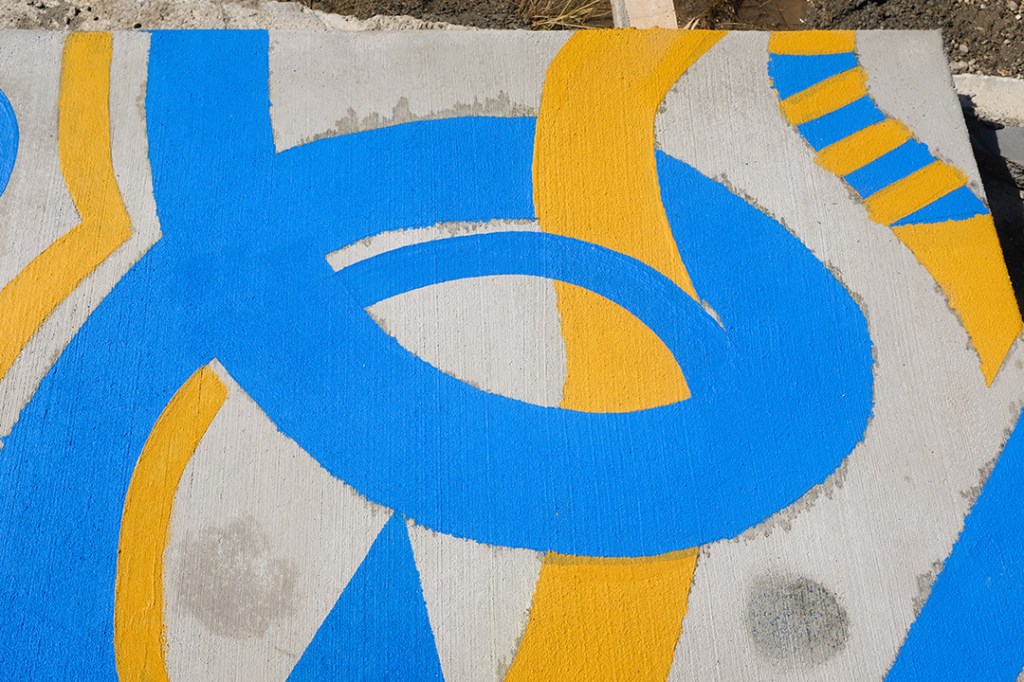
After consulting with several friends and mural artists, we eventually found a different product called Tuffcoat (with help from the Landscape Architect. Thanks Barb!) Tuffcoat is a paint textured with rubber pellets which allows painted surfaces to be grippy, even when wet. It’s often used to ornament Spray Parks. Most importantly, the primer is water-based, so using tape to mask the edges of our lines was more effective.
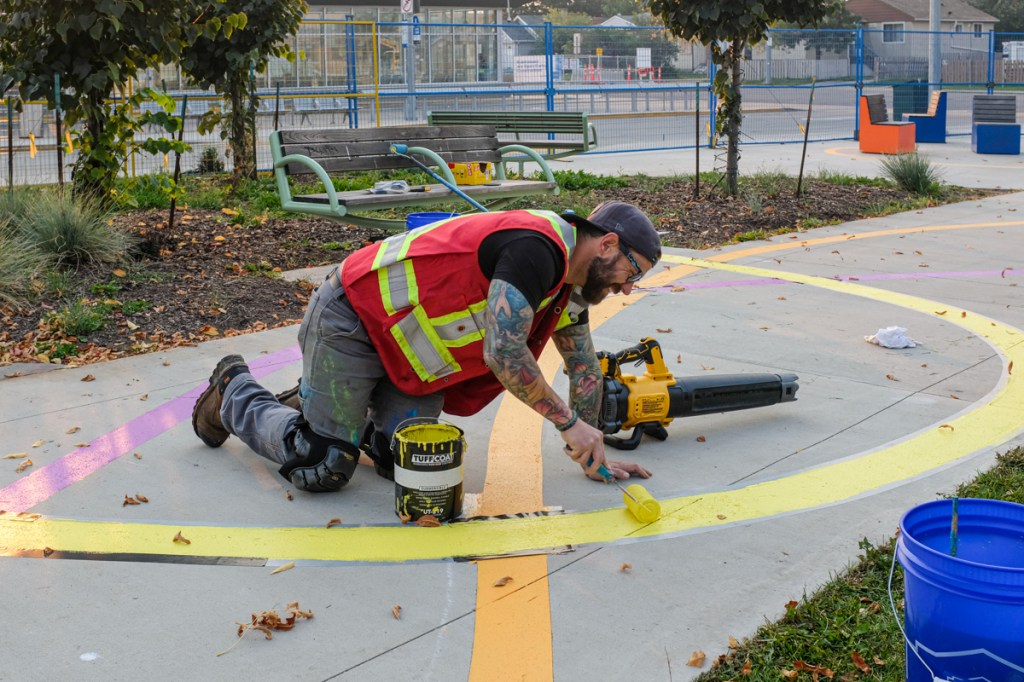
Our design process included many “drafts” to find the best mediums, materials, and treatments for each element of Play It By Ear. Ours was an iterative process, with may consultants and overseers. (You can see full credits for this project here).
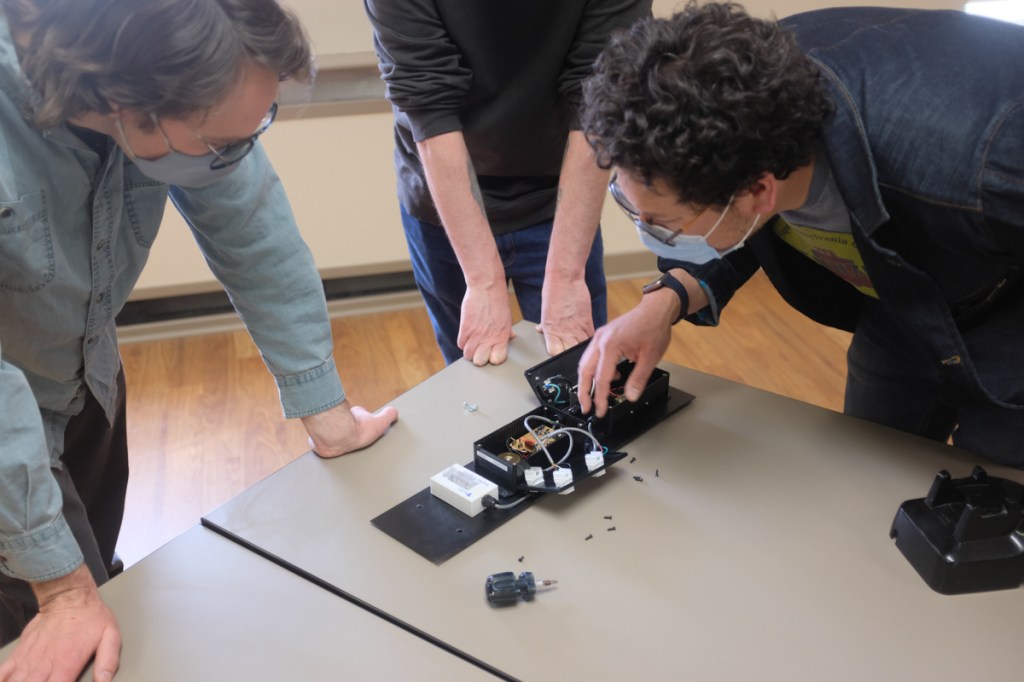
Our colleagues at Edmonton Arts Council inspecting internal phone components
It’s worth acknowledging that the spectre of COVID hung heavy over much of our design process. Play It By Ear was delayed by a year due to concerns around the public perception of releasing an artwork involving high-touch surfaces. Phones are held very close to your mouth; we understood the need for caution. However, as situations became more flexible and better science emerged around the low likelihood of surface transmission, we were met with new momentum.
In a world still experiencing the collective trauma of a divisive global illness, moments of connection are needed now, more than ever. This is the heart of Play It By Ear, and we’re so glad this artwork made it through the design process.
Our next blog post will deal with the next round of challenges: fabrication.
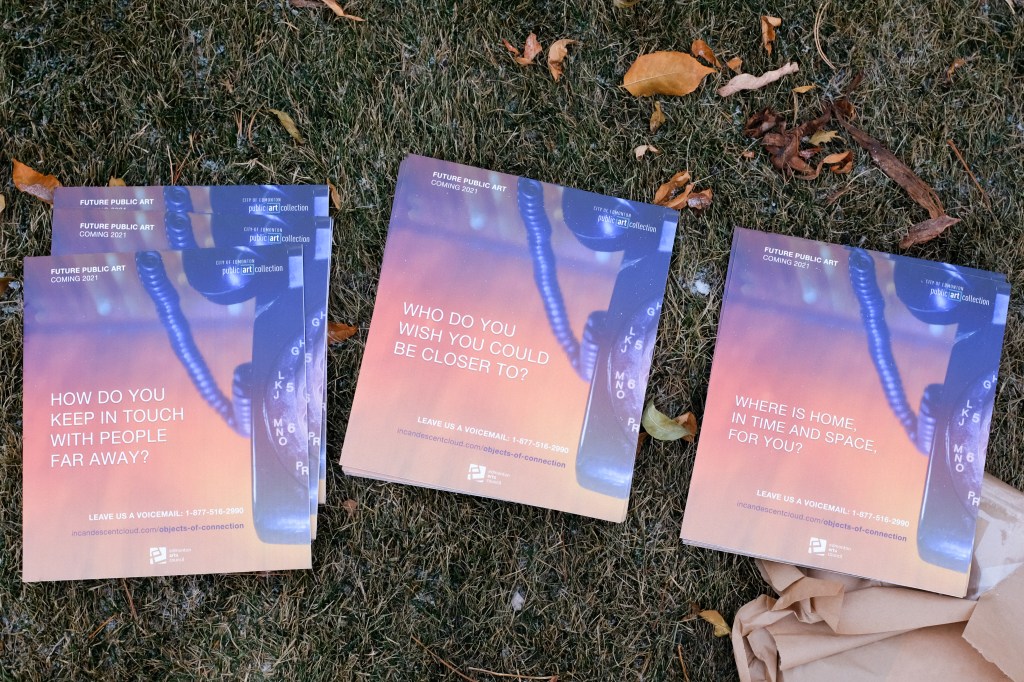

 Play It By Ear
One response to “Design Process”
[…] you haven’t already, take a look at the Design Process behind Play It By […]
LikeLike